The Rise of Smart LED Systems
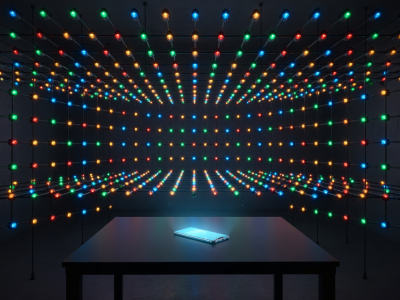
The integration of microprocessors and wireless connectivity into LED fixtures has shifted lighting from a purely utility-based application to a dynamic, interactive system. Smart lighting offers immense flexibility, allowing users to automate schedules, adjust colors, and control consumption through mobile devices or voice assistants. However, navigating the landscape of smart lighting requires understanding the underlying communication protocols and hardware architectures.
Communication Protocols
Smart LEDs do not operate via a universal standard. They rely on specific radio protocols to communicate with control interfaces. Selecting the right protocol is crucial for the reliability and responsiveness of your lighting network.
1. Wi-Fi Direct
Wi-Fi enabled bulbs connect directly to your home router. They do not require a separate hub.
- Pros: Easy to set up, low barrier to entry, can be controlled from anywhere in the world.
- Cons: High power consumption. Adding dozens of Wi-Fi bulbs can congest your router network, leading to lag or dropped connections.
2. Zigbee & Z-Wave
These are low-power, mesh-networking protocols designed specifically for smart home devices. Rather than connecting directly to a router, each bulb communicates with its nearest neighbor, passing signals back to a central "Hub" or "Bridge."
- Pros: Extremely reliable, fast response times. The mesh network gets stronger as you add more devices. Does not congest your standard Wi-Fi network.
- Cons: Requires the initial purchase of a hub. Often more expensive upfront.
3. Bluetooth Mesh
Bluetooth systems allow direct phone-to-bulb connection or employ mesh networking similar to Zigbee without a dedicated hub.
- Pros: No hub required, lower cost.
- Cons: Limited range compared to Wi-Fi. Control is usually limited to when you are physically inside the building unless a bridging device is introduced.
Hub vs. Hubless Systems
When planning a whole-home deployment, the debate between hub-centric and hubless architectures is paramount. A hub acts as a dedicated traffic controller for your lighting. While hubless (Wi-Fi) systems are excellent for renters or users only wanting to automate a single lamp, a dedicated hub architecture (like Zigbee) is almost universally recommended for deployments exceeding 15 to 20 fixtures.
Advanced Features of Connected Lighting
Once your lighting is networked, the possibilities extend far beyond simple remote on/off switches.
- Circadian Syncing: Systems can automatically adjust their color temperature throughout the day, shifting from cool daylight tones in the afternoon to warm amber tones at night.
- Geofencing: Lights can be programmed to trigger based on the GPS location of a user's smartphone, ensuring lights are on when you arrive and off when you leave.
- Entertainment Sync: Advanced controllers can capture color data from a television or PC monitor and project matching colors onto surrounding walls via LED light strips, deeply enhancing immersion.
Security Considerations
Like any Internet of Things (IoT) device, smart bulbs present a potential vulnerability in a home network. Always ensure that the firmware of your smart lighting controllers is kept up to date. For highly secure environments, utilizing an isolated subnet for IoT devices, preventing them from accessing primary data networks, is considered a best practice.